
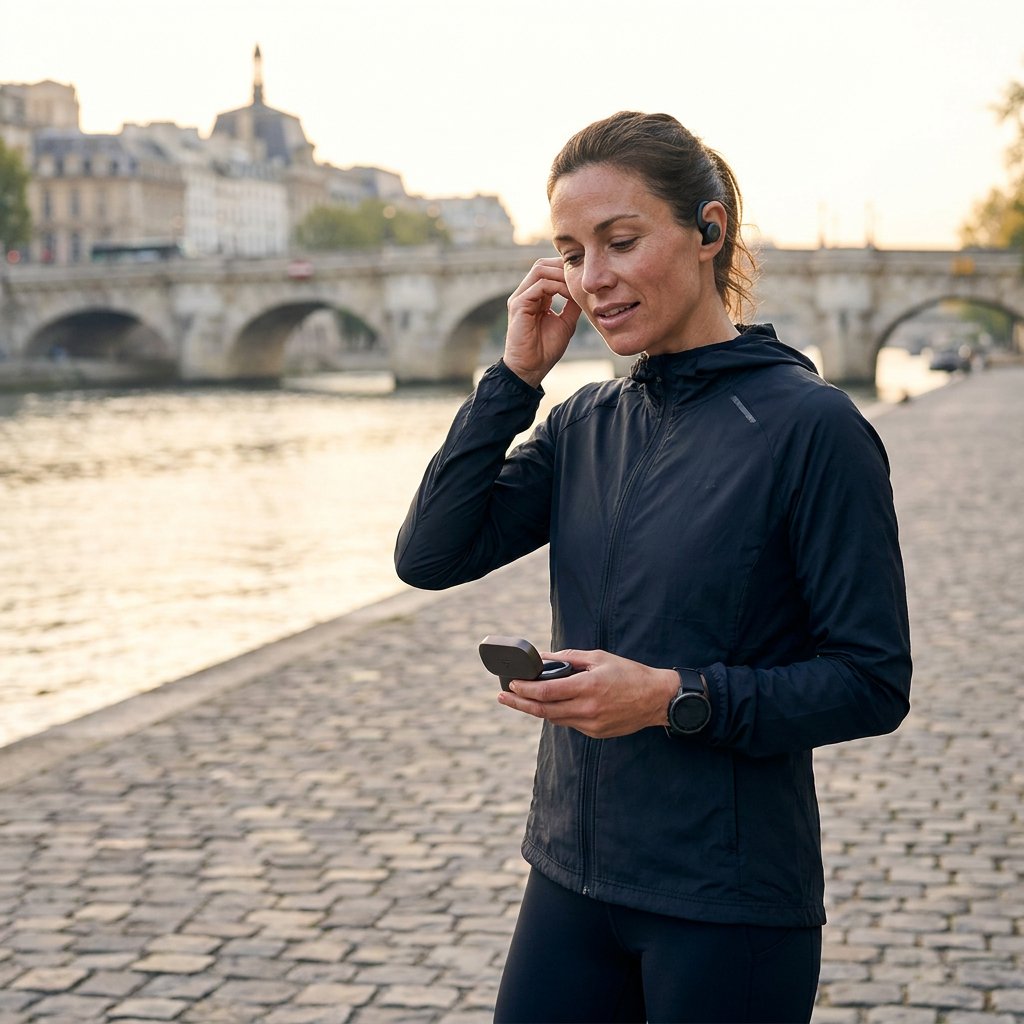
Good earbuds for sport do much more than just play music. They need to stay securely in place, handle sweat, deal intelligently with distracting ambient noise and remain comfortable during strength training, HIIT or running. Make the wrong choice and you will soon end up with earbuds that fall out, flat sound or an awkwardly large charging case. The best sports earbuds therefore suit your training, not just your phone.
What should you look for first in the gym or while running?
When it comes to earbuds for sport, four points are immediately decisive: fit, seal, sweat resistance and ease of use. In the gym, earbuds need to stay in place during bench presses, rowing, burpees and other movements where the angle of your head keeps changing. When running, wind, rain and repeated impact also matter. So do not choose based only on brand or looks, but above all on how stable the model sits in your ear, whether it seals well enough and whether the battery life matches your training routine. For most athletes, wireless sports earbuds are more practical than headphones for sport because they are lighter and move around less. Wired sports earbuds can still be a good option if you do not want to manage a battery, but for freedom of movement, wireless usually wins.
In-ear or semi-in-ear?
For sport, this is often the most important choice. Semi-in-ear earbuds rest mainly at the entrance to the ear canal. They feel airier for some users, but they do not seal as well. In-ear models sit deeper in the ear with a silicone tip and therefore usually provide more grip and more passive sound isolation.
Why in-ear is usually the best choice
In a gym, you often have to deal with loud speakers, dropped weights and conversations around you. Semi-in-ear lets relatively much of that through, so you are more likely to turn the volume up too high or become less immersed in your music. In-ear sports earbuds naturally reduce ambient noise better and generally stay in place more securely during intense movement. That is exactly why, for sports earbuds and running earbuds, they are usually the safest bet.
When semi-in-ear or open-ear can still be a good option
If you mainly work out outdoors and want to keep hearing traffic, cyclists or other runners, a more open design may actually be more pleasant. For easy walks, light cardio or athletes who quickly find pressure in the ear uncomfortable, semi-in-ear or bone conduction can be a logical option. You do give up some isolation and often some bass.
Fit determines whether sports earbuds stay in place
The best earbuds for sport are the models you can barely feel after ten minutes, but that do not shift as soon as you speed up, jump or bend forward. That starts with the right ear tip size. Too small means loose and unstable, too large causes pressure and fatigue. So always test multiple sizes if they are included.
Ear hook, ear fin or standard in-ear
If regular earbuds never work well for you, look at earbuds with an ear hook or an ear fin. An ear hook wraps around the ear and is ideal for running earbuds that must not fall out. An ear fin rests in the outer ear and adds extra stability without automatically making the case bulky. For strength training and indoor cardio, a well-fitting in-ear model is often enough, but for sprint work, circuit training and running, extra retention is often the smartest choice.
Noise cancelling: useful in the gym, less obvious outdoors
Noise cancelling is especially useful if you train in a busy gym. There are two forms. Passive noise cancelling comes from the seal created by the ear tips themselves. Active noise cancelling uses microphones to reduce distracting sounds. In practice, that combination works especially well: less noise, more focus and less temptation to turn the volume up unnecessarily.
Outdoors, it is different. When running or cycling, full isolation can be unsafe, especially in traffic or on shared paths. In that case, a transparency mode, an open-ear model or a less isolating design is often smarter than maximum noise reduction. So choose noise cancelling based on your environment, not just on the specifications.
Sweat resistance and IP rating
Sweat is unavoidable during intense training. So always check the IP rating. For most athletes, IPX4 is enough: it protects against splashes and sweat. If you often train outdoors, run in the rain or sweat heavily, a higher rating such as IPX5, IPX6 or IPX7 gives extra reassurance. Also note that water resistance does not automatically mean the charging case is equally well protected.
Sound quality should be energising
When working out, you are usually not looking for neutral studio sound, but for energetic audio that supports rhythm and motivation. Good wireless sports earbuds can therefore have strong bass, as long as voices and detail do not get lost. Bass helps especially with cardio, HIIT and strength training where tempo matters. More important than sheer volume output is that the sound stays full, even when you are dealing with background noise.
Battery life and case size
Long battery life always sounds appealing, but with sports earbuds it also matters how portable the whole package remains. A large case is awkward in shorts, leggings or a small gym bag. If you usually work out for one hour per session, a compact case is often more valuable than an extremely large battery reserve. If you also use the same earbuds for commuting and office use, extra battery life becomes more relevant. So pay attention to two figures: playtime per charge and total playtime with the case. Fast charging is a nice bonus if you need a quick top-up just before leaving. For on-the-go power between sessions, power banks and chargers keep your earbuds and phone ready.
Which sports earbuds suit your training?
The right choice mainly depends on the environment, the intensity and how much ambient noise you want to keep hearing.
| Use case | Best type | What to look for |
|---|---|---|
| Gym and strength training | In-ear, wireless | Secure fit, passive isolation, compact case |
| HIIT and circuit training | In-ear with ear fin | Extra stability, IPX4 or higher, good bass |
| Outdoor running | In-ear with ear hook or open-ear | Should not fall out, wind and rain, staying aware of ambient noise |
| Cycling or walking in traffic | Open-ear or transparency mode | Safety and being able to hear your surroundings |
| Light indoor cardio | Semi-in-ear or lightweight in-ear model | Comfort, low weight, enough grip |
Choose more wisely when buying
- For most sports, start with a well-fitting in-ear model and only then move on to extra features.
- Check for at least IPX4 if you sweat or train outdoors.
- If earbuds quickly fall out of your ears, choose earbuds with an ear hook or ear fin.
- Use noise cancelling mainly in the gym, and outdoors put safety first.
- When buying, also pay attention to product quality and certification, such as CE and RoHS compliance.
Not sure which model fits you best? Get personal advice on sports earbuds.
If, alongside performance, you also value design and reliable delivery, it is wise to choose sports earbuds and audio accessories from an EU-based supplier. This helps you avoid unclear specifications and choose consistent quality for everyday use.
Frequently asked questions about sports earbuds
Are AirPods good for sport?
That depends on the model and especially on how they fit you. Models without sealing ear tips are comfortable for some athletes, but they offer less grip and less passive isolation. For intensive gym training or running, in-ear sports earbuds are often more stable.
What minimum IP rating do I need?
For indoor sport, IPX4 is usually a good minimum. If you often train outdoors, in the rain or during heavy sessions with lots of sweat, choose higher protection. Also check whether that rating applies only to the earbuds or to the case as well.
Are earbuds with an ear hook better for running?
Yes, for many runners they are. An ear hook adds extra security during repeated impacts and quick changes of direction. Especially if regular wireless earbuds come loose on you, running earbuds with an ear hook are often the most stable solution.
Are headphones for sport a better alternative?
Sometimes, but usually not for intense training. Sports headphones can be comfortable on a stationary bike or during easy cardio, but they heat up more quickly and move around more. For mobility, wearing comfort and stability, earbuds win in many sporting situations.
How do I stop sports earbuds from falling out?
Start with the right ear tip size, wear the earbuds according to the brand's fit instructions and, if necessary, choose a model with an ear fin or ear hook. If they still keep shifting, the design simply is not suitable for your ear shape and another type is the wiser option.